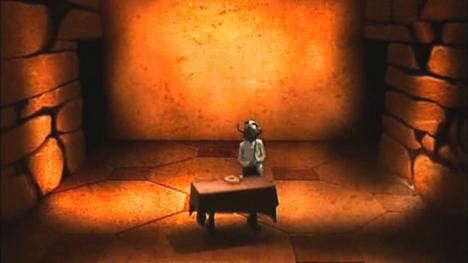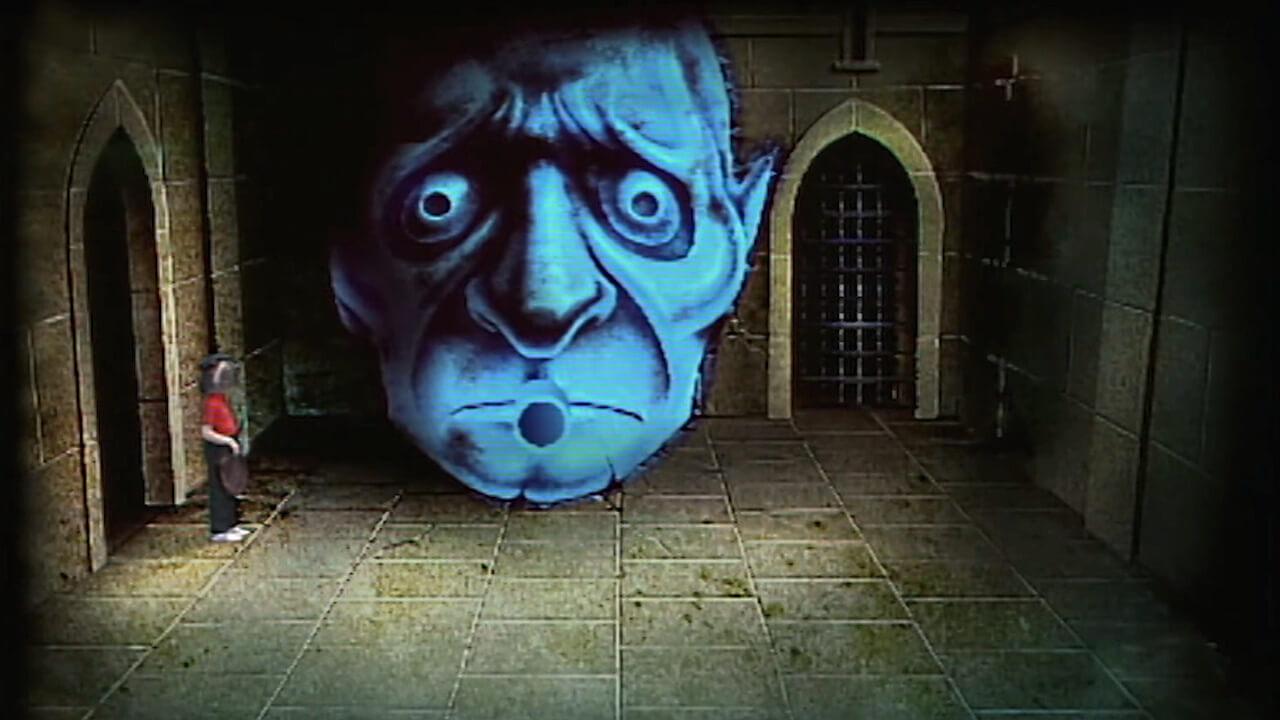
The gargoyle was found in Level 3. Some of the teams that encountered it had to answer a riddle or improve its mood until it released the exit.
- Series | 1, 2, 3
- Level | 3
The gargoyle was a depressing creature but could be a useful source of information or magic.
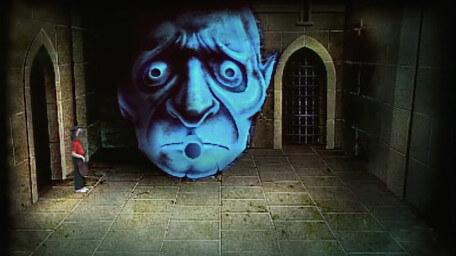
The room was a dark dungeon chamber with two doors and a large head on the rear wall.
The dungeoneer normally entered from the left door. Their exit might be obscured by darkness or a portcullis until the gargoyle, Mug, became cheerful enough to release it.
Learn or lose
For some dungeoneers, an encounter with the gargoyle required a swift escape before its pessimism drained their confidence.
For others, it could be a lengthier encounter, with the opportunity to learn magic or gain a vital clue.
One dungeoneer must command the gargoyle to speak. It describes one of the objects to take from the Level 3 clue room.
Some teams must cheer up the gargoyle by flattering it constantly with praise. Once it is cheered, it releases the exit and might also provide magic.
In Series 3, the gargoyle (with a different look) asks a very difficult riddle. Without an answer, the team do not earn the magic they need to reveal the correct pathway from the Stained Glass Window.